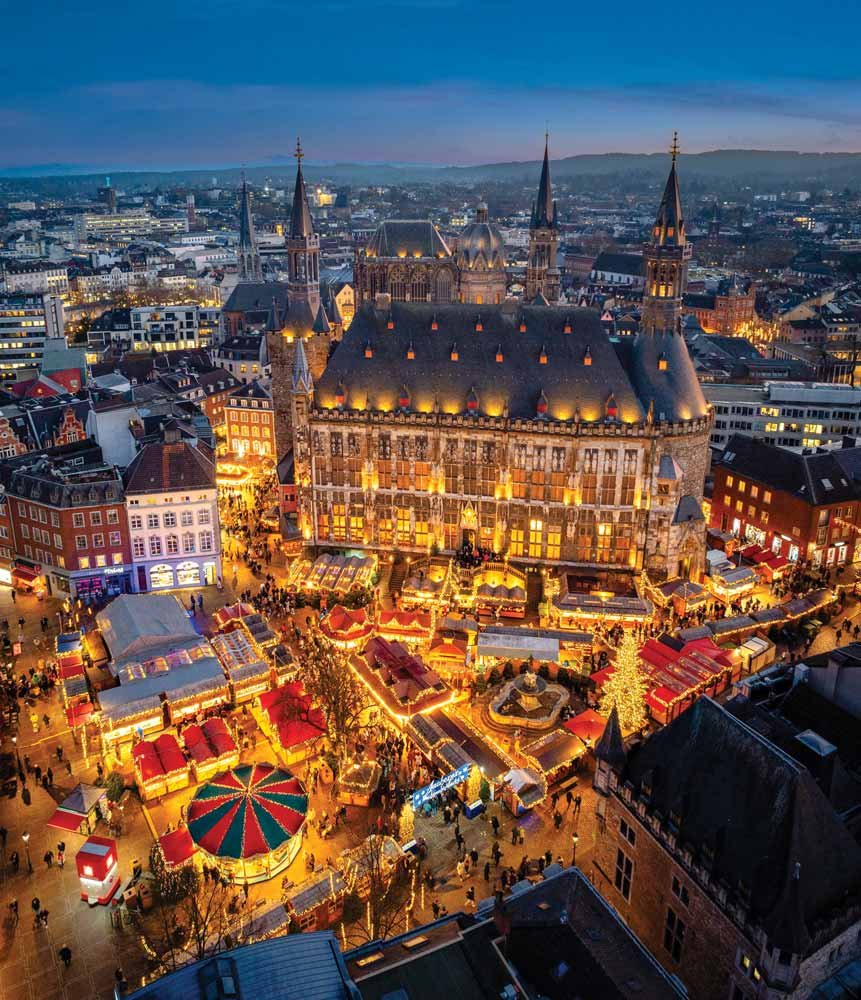
Every winter, more than 3,000 Christmas markets sparkle across Germany. Rather than follow the crowds to the country’s biggest cities, let the lights lead you somewhere more intimate. While the festive atmosphere draws you in, the flavours make you linger.
Start with Something Savoury
Germany does sausage (Bratwurst) in almost as many ways as it does Christmas markets. In Regensburg, order eine Knacker mit allem, bitte for grilled sausage loaded with sweet mustard, horseradish and pickles. In Würzburg, try saying Wördsburcher Winzerbratwoarscht im Kipf, if you can, for a wine-seasoned sausage slipped into a roll. I can tell you that it may take longer to order than to eat.
But sausage does not have the market entirely to itself. In Osnabrück, look for hearty, slow-cooked kale (Grünkohl) served with smoked Mettwurst. Since Freiburg is the gateway to the Black Forest, you will surely find its regional specialty, smoked ham (Schwarzwälder Schinken) tucked into crusty rolls throughout its 900-year-old Old Town.
Raise a Mug to the Season
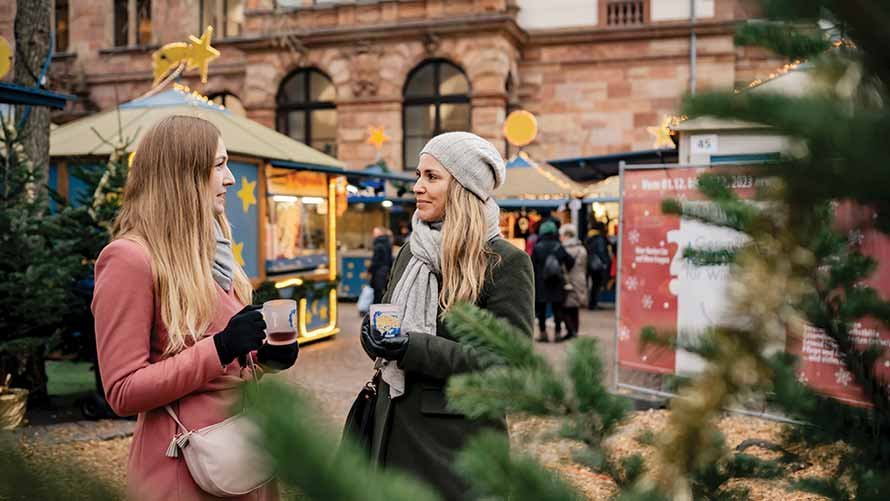
Follow the scent of cinnamon and cloves to the nearest Glühwein stand. At a German Christmas market, there is rarely just one. The steaming wine warms you from within, while the mug thaws your fingers. The wine may disappear in minutes, but the mug could follow you home. Best of all, every city designs its own collectable Glühweintasse.
But not all mulled wine is red. Regional grapes shape the pour. Around Koblenz, vintners produce red, white and rosé Glühwein, while Wiesbaden pours steaming Riesling from its historic Neroberg vineyard. Trier even swaps grapes for apples, serving the hot spiced cider Glühviez.
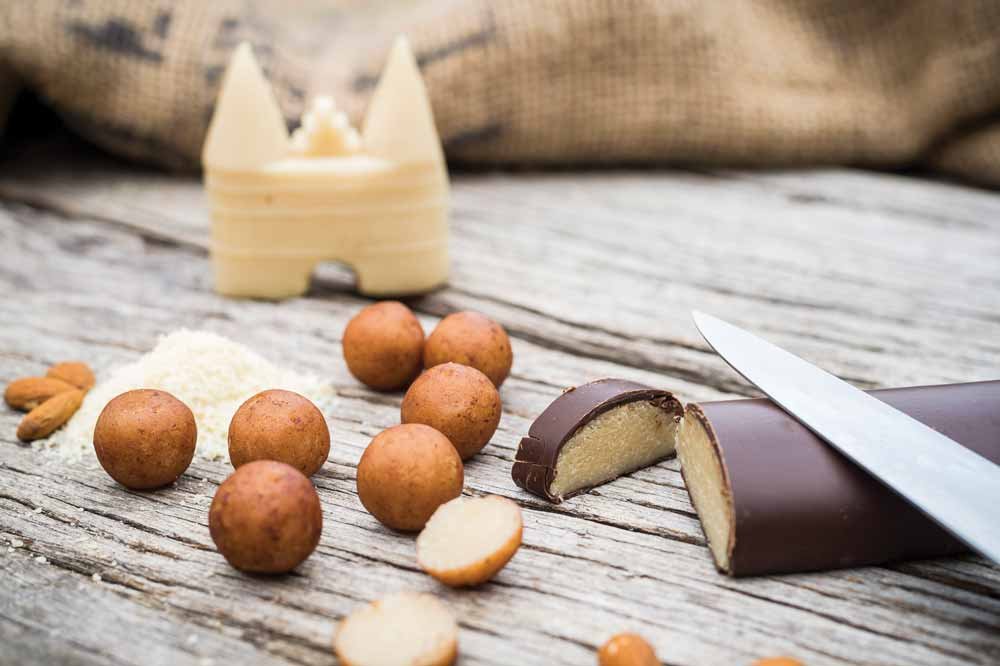
Dessert often arrives in a mug, too. Bonn serves Eierpunsch, crowned with whipped cream, while Lübeck turns its famous marzipan into a sweet drinkable treat (Marzipanpunsch).