Skip to content

EUROPE
Moody Madeira
There is a place on Earth that tugs the senses, makes you laugh, and is having its (TikTok) moment that is out of this world
By Ilona Kauremszky
Shrouded in a thick fog that drapes the mountaintops in gauzy veils, hikers vanish into the mysterious northern slopes. I’ve reached Fanal Forest.
Here, 800-year-old Ocotea foetens—gnarled, moss-bearded elders—stand like time travellers. This is the Laurissilva Forest, a UNESCO World Heritage Site. Once stretching across southern Europe, this subtropical rainforest is a surviving remnant of an ecosystem dating back around 20 million years. Today, roughly 20 percent of Madeira is still cloaked in its green embrace.
TikTokers can’t resist it. One twisted tree, nicknamed the Witch Tree, has become a social media star. It’s where hikers step forward gingerly, fog so thick you can barely see your boots. Shapes appear, vanish, reappear. The atmosphere is so haunting that Star Wars: The Acolyte filmed here in 2023. A new parking lot, big enough—as one local jokes for the Millennium Falcon—now receives carloads of curious adventurers.
“They come only because they want this,” explains Vítor Rosa, my guide with Discovery Island Tours. He steers wide-eyed visitors onto muddy trails and secret overlooks, sharing his island with quiet pride.
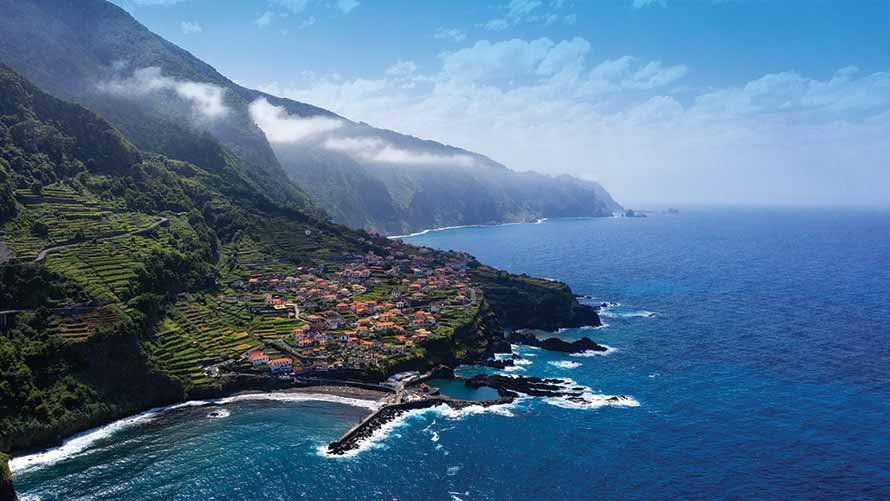
Everyone, I discovered on a recent trip, was there for island adventure: be it dining, marine excursions, beguiling hikes, and gardens galore. Its high elevations rife in basalt cliffs, tumbling waterfalls, terraced vineyards are so dramatic TikTokers have even crowned Madeira as the Hawaii of Europe.
Situated in the Atlantic, which locals lovingly call the Madeira Sea, and they’ll correct you otherwise, lies this postage-stamp sized volcanic island. Part of an archipelago, there’s sun-kissed Porto Santo, and the wild, uninhabited Desertas Islands. Closer to Africa than mainland Portugal, Madeira teems with exotic curios from dragon trees to Pride of Madeira flowers, and the tiny endemic Madeira firecrest, Europe’s smallest bird. Lizards dart between cobblestones, and in the Laurissilva, you might even spot the elusive Madeira long-toed pigeon.
My adventure starts before I even land. Madeira’s airport, named for global soccer superstar Cristiano Ronaldo, who knows how to maneuver a ball, is perched on a short seaside runway that only specially trained pilots dare navigate. As our flight swoops in, it pulls back for a second attempt, and when we finally touch down, applause erupts. It’s Old Europe’s way of saying thank you for a safe arrival.
Built on a natural amphitheatre of steep hills facing the sea, Funchal becomes my home base for nearly a week. And nothing says Madeira quite like my first morning thrill. I’m hurtling down the mountainside on a Monte Toboggan, squealing and gripping the wicker sled as two men in boater hats and rubber-soled boots steer us along steep ice rink slick streets. A tradition since the 1850s, the ride is pure, heart-pounding fun.
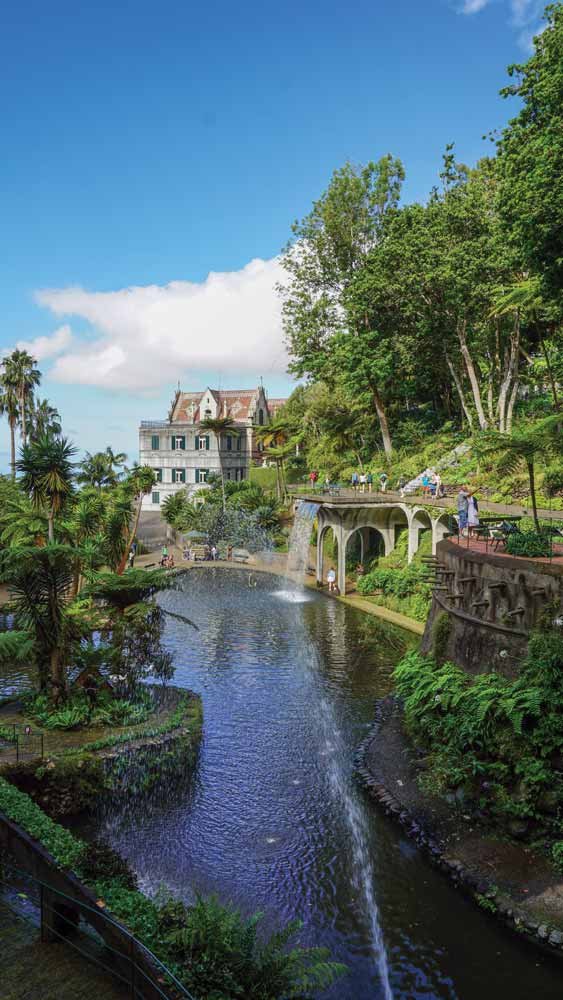
Once my pulse slows, I glide up the hill by cable car to Monte Palace Tropical Garden. Koi glide through orchid-framed ponds and hidden sculptures peek from leafy corners, while Funchal stretches out below.
At Palheiro Gardens, even more gasps occur. The estate famous for its camellias belongs to the Blandy family—English entrepreneurs whose Madeira wine empire fueled the island’s shipping boom. Head gardener Miguel points out magnolias, proteas and centuries-old trees. The consummate expert insists I visit Blandy’s Wine Lodge downtown, where dusty barrels slumber and tastings reveal why Churchill counted Madeira wine among his favourite libations.
Outside Funchal, the mood shifts. Through winding roads, often without guard rails, we off-road onto historic laneways that resemble Madeira lace, threading the coastline with tunnels burrowing through mountains. “Madeira looks like Swiss cheese,” Vítor jokes about the island’s numerous tunnels as we enter the Cortado Tunnel, stretching more than three kilometres. Each tunnel exit is a big reveal from waterfalls tumbling off emerald heights to cliffs plunging like cathedral walls.
At Ponta de São Lourenço, barren volcanic cliffs jut into the sea. Pride of Madeira blooms cling to rock crevices, their blue-violet flowers vibrating in the gale. A barefoot boy scrambles up the path beside his parents. “He never wears shoes,” his mother laughs.
Lookouts, or miradouros, dot the island. Europe’s highest sea cliff Cabo Girão, and Miradouro do Guindaste offer glass platforms with heart-skipping panoramas. A flatfooted tourist squirms. My own toes curl against the transparent surface. Out west, Ribeira da Janela is commonly known as the “River of the Window.” Its volcanic sea stacks are carved by waves into a natural arch. The Acolyte filmed here too, a galaxy not so far away.
While Fanal’s mist surprises day-trippers, it’s Madeira’s unexpected climate shifts that are grappling. We drive across Paul da Serra, a windswept grassy plateau of volcanic soil. It stretches silent and empty. “The last volcano erupted over six thousand years ago,” Vítor reassures me atop this ancient shield volcano that formed Madeira.
The land feels ancient and raw.
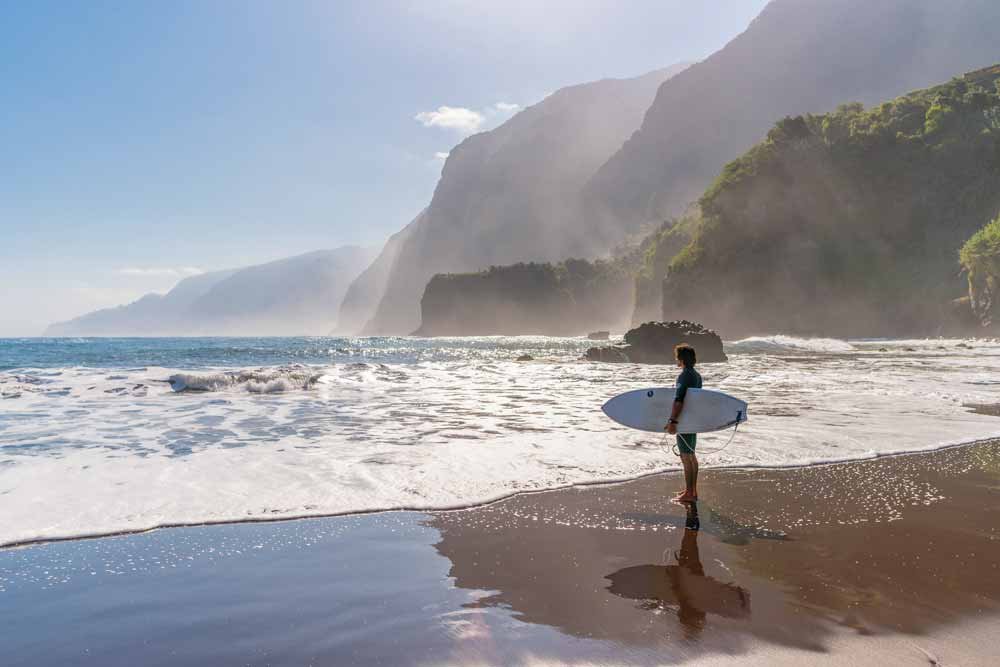
Except for the mist-draped tourist hotspot of Fanal, the island can feel like your own private retreat. Whitewashed villages cling to cliffs, fishing boats bob in pocket harbours, and surfboards line black-sand beaches. There’s a chilled vibe. Stand-up paddleboarding, whale-watching, and paragliding compete with lazy afternoons sipping poncha, Madeira’s potent sugarcane-rum cocktail.
Dining is its own adventure. Skewers of beef (espetada) roast over laurel wood, dripping juices onto golden milho frito—fried cornmeal cubes. Bolos do caco, garlic-slathered flatbreads, vanish in seconds. One evening, I dine al fresco at Jardim da Magnolia, where whimsical sculptures hide among towering Norfolk pines. The menu is divine: black scabbardfish, hauled from Atlantic depths, appears with bananas, a pairing that sounds wrong but tastes right. Dessert is bolo de mel, Madeira’s sticky honey cake.
For my final dinner, I slip down a narrow lane behind the Savoy Palace. A green carpet leads into Audax, a discreet MICHELIN-recommended restaurant. Leafy vines spill over its glass doors, and the mood crackles with anticipation. The blind tasting menu unfolds like a journey through Madeira: seven courses of sea and mountain, orchard and forest, all plated with finesse. I taste the island without leaving my seat.
The mood is electric.
Fly High and Leave the Driving Behind
Canadian travellers can arrive via SATA Azores Airlines, with a stop in the Azores. My flight is filled with honeymooners, babies clad in “my first flight” onesies, adrenaline seekers with hiking boots slung over their shoulders, and families spanning three generations.
Once here, leave the driving to the locals. Madeira’s roads twist into hairpins, climb steep mountainsides, and often lack guardrails. For me, the thrill is best left to drivers like Vítor, who knows every tunnel, cliff, and hidden valley. I sit back, buckle up, and let Madeira reveal its mysteries.
Travel Planner
For travel information about Madeira, visitmadeira.com