Skip to content

ARIZONA
Arizona’s Capital of Desert Design
Frank Lloyd Wright’s legacy is inextricably linked to Scottsdale and its remarkable wealth of Art-Deco, mi-mo and organic architecture
Words and Photos BY ADAM BISBY
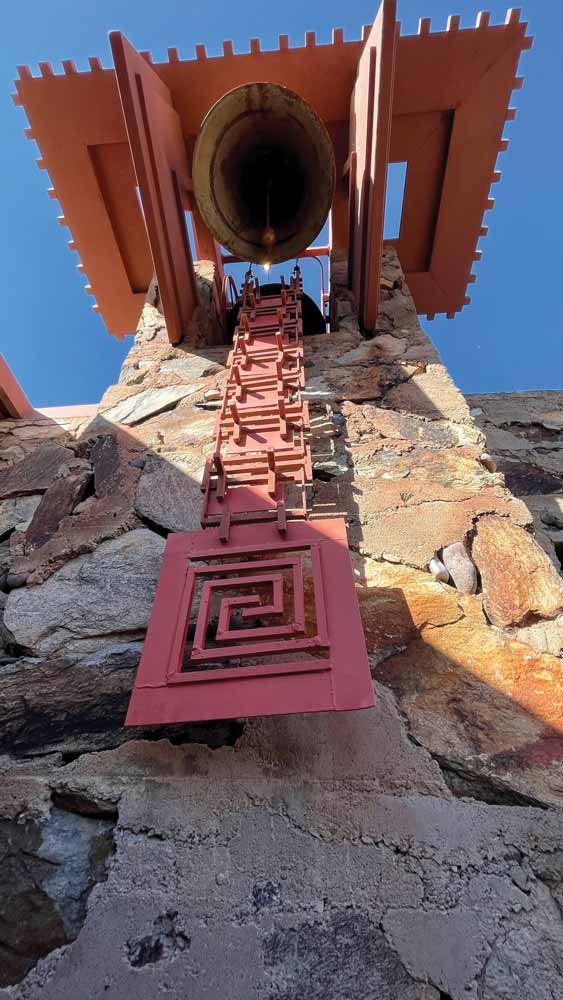
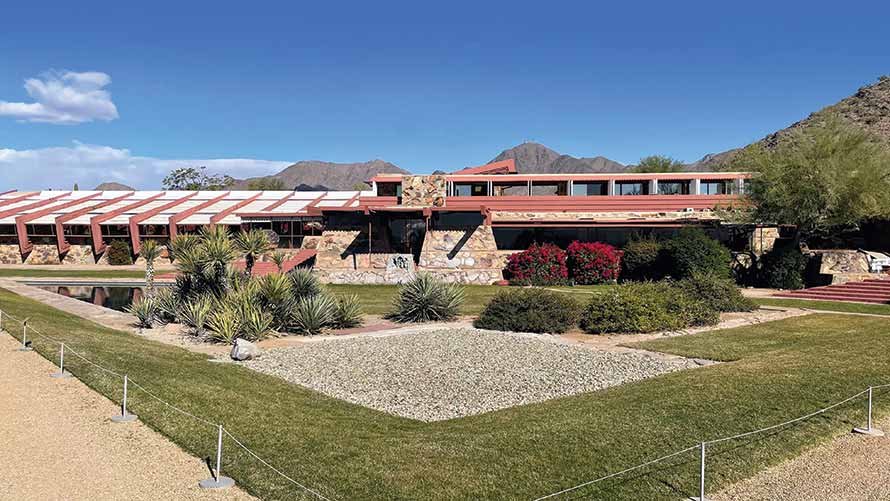
Starting in the late 1930s, the bells of Scottsdale’s Taliesin West sounded for three reasons: lunch, dinner, and emergencies. But on a guided tour of Frank Lloyd Wright’s winter home and architectural laboratory, my wife rings them for a less practical purpose.
Widely regarded as America’s greatest architect, Wright may well have approved of Angela’s simple desire to hear joyful noise burst from the bell tower, a wood-crowned protuberance made of desert rocks embedded in concrete. Indeed, five years after the last Wright apprentices left Taliesin West, the exuberant self-expression championed by Wright at the World Heritage Site remains infectious.
The 200-hectare community “wasn’t just about architects drafting blueprints,” explains Bruce Orendorf, our tour guide and director of public engagement at the Frank Lloyd Wright Foundation. “They were also farmers, cooks, musicians, and dancers. Wright believed hands-on learning was essential.”
Angela and I are familiar with Wright’s architectural legacy, having previously visited a few of his best-known buildings. But our five-night visit to Scottsdale reveals lesser-known aspects of his genius—from stained glass to costume design to citrus farming—as well as his impact on a city that blends rich history and desert beauty with cultural and culinary artistry.
Healing Hands
The lobby of our first stop, the 496-room Grand Hyatt Scottsdale Resort, is buzzing the morning after our arrival, and no wonder: With its 10 pools within chipping distance of the Gainey Ranch Golf Club—one of 200-plus tracks in the Scottsdale area—exclusive guest access to the latter is understandably popular.
We bypass the fairways in favour of Spa Avania. Designed by Vernon Swaback, who studied under Wright at Taliesin West, the Hyatt’s stand-alone spa is home to an outdoor mineral pool and lotus pond, various relaxation areas, and a full-service salon. I spend 90 blissful minutes in one of 19 treatment rooms, where a “Luk Pra Kob” massage blends Thai bodywork with fragrant herbal compresses.
Biltmore Glamour
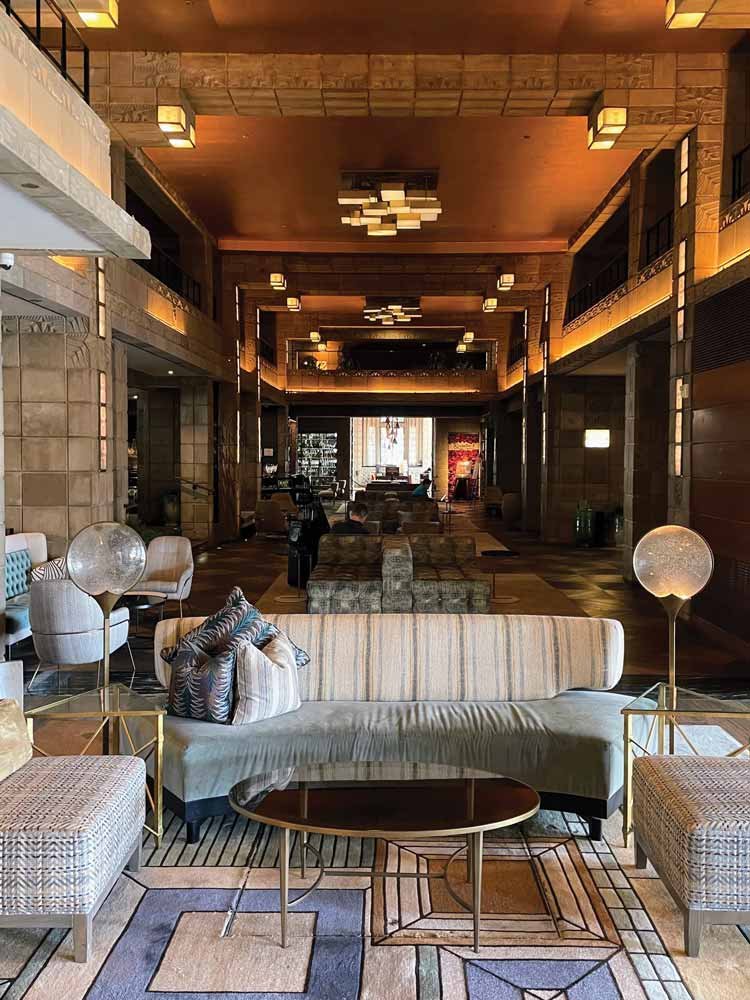
Next we take a driverless Waymo taxi (see sidebar) to the Arizona Biltmore hotel. Heavily influenced by Wright’s organic architecture and designed by his student Albert Chase McArthur, the so-called Jewel of the Desert soon became a retreat for Hollywood’s elite after opening in 1929.
We marvel at the radiant ceiling of the aptly named “Gold Room” event space, which in-house tour guide Ashley Johnson says is the world’s second-largest gold-leaf ceiling, behind only the Taj Mahal. Soon after, we reach a Prohibition-era “Mystery Room” through a backroom corridor.
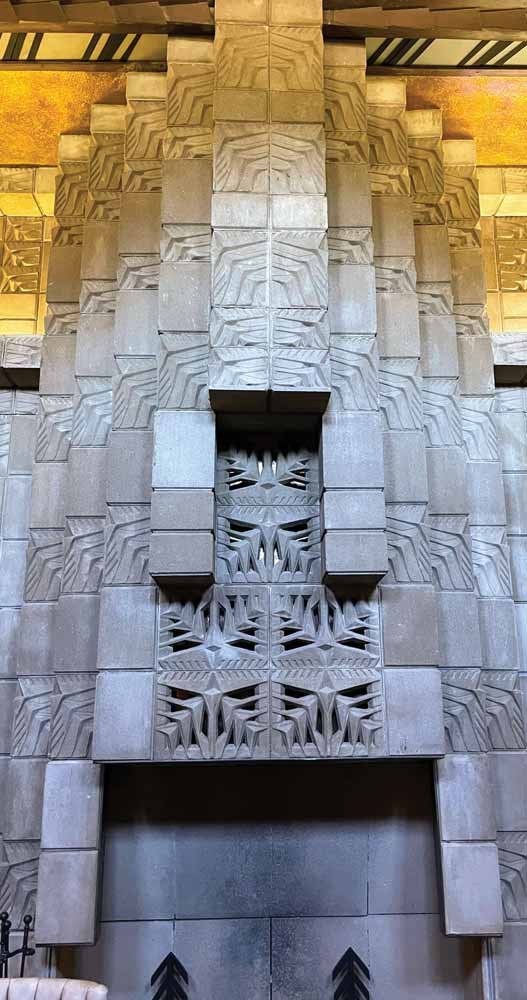
“During Prohibition, a spotlight operator on the roof would shine light into the skylight to warn of approaching police,” Johnson explains while demonstrating how a sliding bookcase hid the bar. The room’s fireplace, meanwhile, provides a towering example of the 250,000-plus handmade concrete blocks, featuring 24 geometric patterns that adorn and support the 705-room Biltmore.
Masterful Mi-Mo
Checking into the Hotel Valley Ho the next day is like stepping into the golden age of mid-century modern (mi-mo) design. Originally opened in 1956 with 99 rooms, this ultra-stylish retreat was meticulously restored to its former glory in 2004, when it also underwent an expansion that added five storeys and more than doubling occupancy.
Designed by Edward Varney, who studied under Wright, the hotel provides a prime example of organic architecture’s mi-mo connections. Varney’s use of masonry, cast and poured concrete, natural stone, and expanses of glass connect the building to its desert surroundings. Unlike Taliesin West and the Biltmore, however, the Valley Ho eschews Wright’s trademark technique of compression and release—where a smaller room, foyer or passageway leads to a much larger one—in favour of airy spaces filled with natural light.
Ace Bailey, our guide from Ultimate Art & Cultural Tours, shares anecdotes about the hotel’s glamorous past, including its role as a hideaway for Hollywood A-listers depicted in photos lining a hallway. “The paparazzi didn’t follow celebrities here in the ’50s,” Bailey says. “It was just too inconvenient—only two lanes, mostly dirt roads. People would say, ‘Pack a lunch—you’re going to Scottsdale!’”
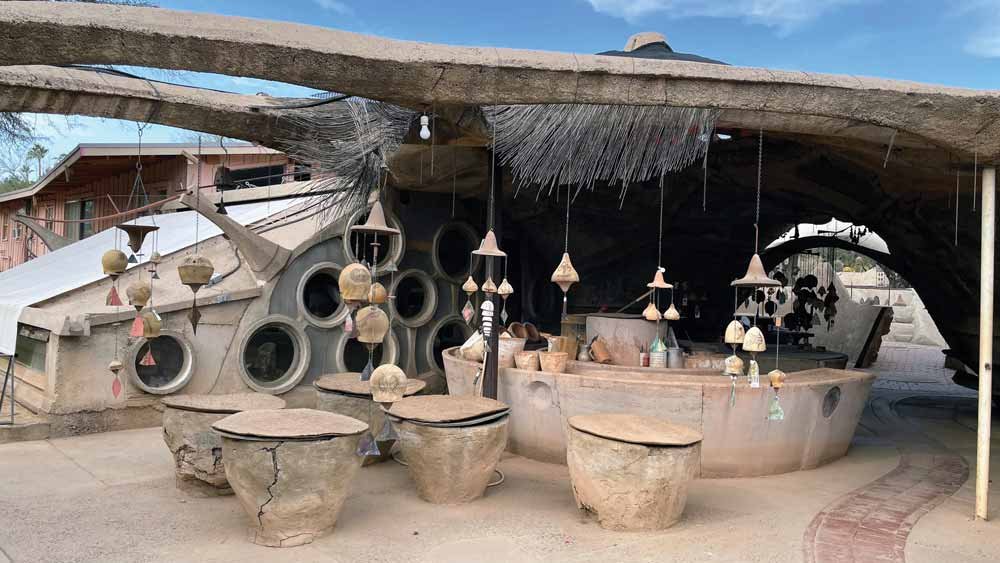
Our “Art and Architecture” tour proceeds to Cosanti Originals, the former studio and residence of visionary architect and Wright apprentice Paolo Soleri, where we admire handcrafted bronze bells and experimental earth-formed concrete structures.
And that, we decide, is about as organic as architecture gets.
Look Mom, No Driver!
In 2020, the Phoenix metropolitan area (including Scottsdale) became the first city in the world where the public could ride in driverless taxis. Visitors hail the Waymo-guided Jaguars using the Waymo One or Uber apps.
Travel Planner
For more travel information on Scottsdale, visit experiencescottsdale.com