SPAIN
Andalusian Crush
Experience the wellness rituals, ancient wisdom, and seaside serenity that make Andalusia feel like an undiscovered Blue Zone
BY ILONA KAUREMSZKY
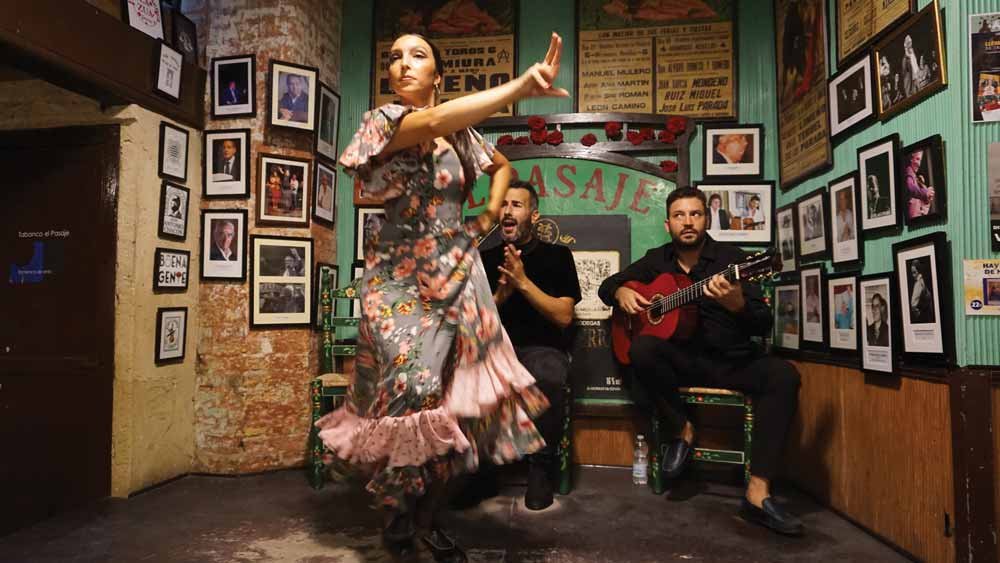
There’s a dark chamber where only a few are invited to tiptoe among ancient barrels incubating liquid gold so fine that even the late Queen Elizabeth was a fan. I have wandered into one of Spain’s oldest wineries, Bodegas Fundador, founded in 1730. It’s famed for iconic blends like Harveys Bristol Cream, which bears the Royal Warrant, and for producing Spain’s first brandy. It’s one of the city’s esteemed exports where another soul-stirring creation thrives: flamenco.
Yet by day, Jerez, like cities in the south that I encountered on a recent trip, shares a soothing silence. Shutters remain closed. Narrow streets are shielded from the Andalusian sun. But nightfall brings life. Families drift into plazas, children whirl on carousels, and friends gather at alfresco tavernas, their laughter carrying in Andalusian staccato. There is an unofficial song here of sun and spirits that feels eternal.
This fall, I joined JourneyWoman’s Carolyn Ray on a solo women’s trek through Andalusia, deliberately bypassing headline-heavy Seville to linger in places like Ronda and Nerja in Málaga, and Jerez and Arcos in Cádiz, each an easy hop from the next. As I wandered these winding alleys and coastal sunsets, I couldn’t help wondering, could you truly live forever in Andalusia?
The ancients believed this land held something extraordinary. Phoenicians prized its ports; Romans revered its fertile soils; Moors infused it with innovation; and Christians layered spiritual traditions atop it all. Each left clues to living well.
Wellness tourism is booming, yet Andalusians have been practicing its principles for centuries. As one local put it, you’ll get Vitamin D in panoramic doses, sea breezes to soothe the soul, slow living to lower cortisol, fresh food, and, wine savoured in moderation. Longevity hotspots like Okinawa, Japan, and Costa Rica’s Nicoya Peninsula are celebrated as Blue Zones for diet and lifestyle. Yet here I was in Andalusia, a place that offers the same gifts.
And so began my long-living odyssey.
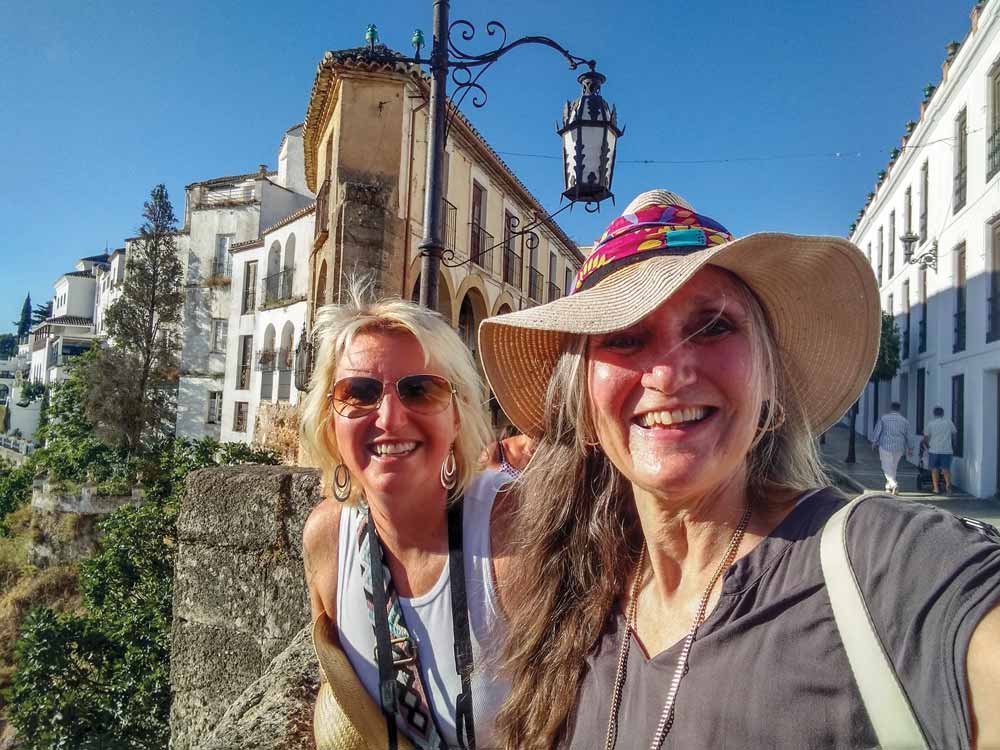
RONDA: The View that Stilled My Heart
Ronda rises dramatically from the Serranía like a city split by the gods, its legendary El Tajo Gorge carving a deep wound between ancient quarters joined by the famed Puente Nuevo. Orson Welles adored this place so fiercely that he chose to have his ashes interred here, eternally situated in a city as dramatic as any of his films.
Wandering quiet lanes at dawn, I found safety, serenity and spectacular scenery at every turn—a solo woman traveller’s dream. From my hotel room at the Parador de Ronda, the view spilled out to a backdrop of jagged cliffs with tidy patches of wheat fields and olive groves below.
My visit coincided with a flamenco festival. The city vibrated with castanets and crooning, women in polka-dot dresses sashaying under streetlights.
If living forever requires joy, Ronda feels like a fountain of it.
JEREZ: Where Horses Dance and Sherry Sings
Jerez seduced me twice: once with sherry, once with horses. Each revelation showcased enduring tradition.
Mornings began with rooftop swims at Hotel Eurostars Asta Regia, the sun rising over terracotta rooftops. The city’s lively Mercado Central lured me next, its fishmongers slicing tuna and fruit sellers arranging pyramids of citrus.
But the real magic occurred at the Royal Andalusian School of Equestrian Art, where horses gallop to classical music, their hooves tapping an ancient rhythm. Watching the riders in embroidered jackets, I felt transported to a world where elegance rules and hurry holds no dominion.
Inside another old sherry cellar, now a museum, I found a trove of horse-drawn carriages, velvet-lined and a horse-care centre for more equestrian encounters.
Lunch at La Carboná sealed the deal. At this old sherry bodega, every dish was an ode to sherry, from the caramelized reductions to the smoky infusions.
ARCOS DE LA FRONTERA: Where My Spirit Mama Awakened
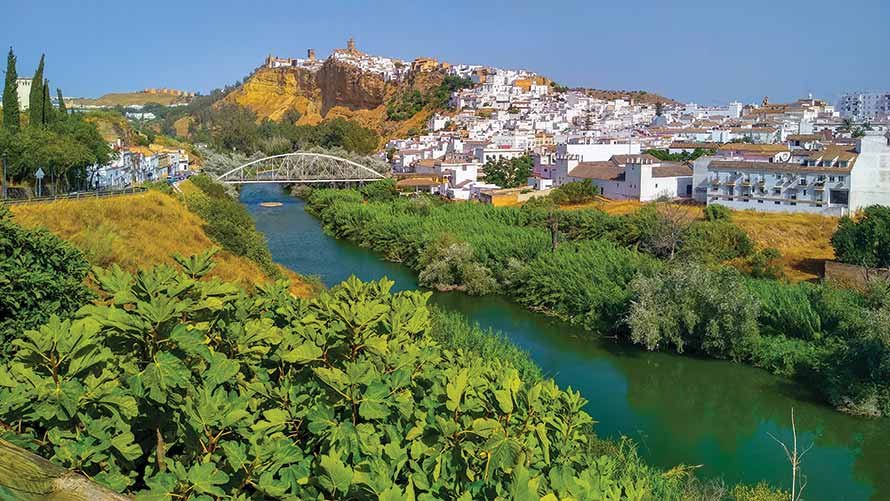
Arcos de la Frontera spirals upward like a white crown atop sandstone cliffs. Here, amid Moorish arches and Christian bells, I met Ana, my spirit mama. A local guide, her laughter echoed off the medieval walls as we ascended steep streets, pausing to watch a car precariously navigate narrow alleys.
At the top, a peculiar stone circle in a plaza near the Basilica of Santa María de la Asunción captured my attention. Locals say it holds mystical energy. “This magic circle has special energy qualities that some women identify. But really, it’s Sufi in origin,” explained Ana about the Islamic spiritual order that practiced meditation here. I struck a yoga tree pose, letting the energy flow. Later, we snacked on pastries made by unseen nuns, their sweets sold through a Lazy Susan that preserves anonymity. If heaven has a hilltown, this is it.
CÓRDOBA: Art, Women and My First Cold Plunge
From flower-filled patios to the women weaving stories in ceramic studios, Córdoba pulses with history and creativity. Inside the Mezquita Cathedral, amid a forest of candy-cane arches, it’s here where I observed Islamic artistry and Christian devotion coexisting in breathtaking dialogue.
My hotel, across from the train station, underscored Spain’s astonishing rail network. Trains arrive nearly everywhere, making car-free travel possible and pleasurable. Motor coaches zigzag toward remote villages, so no hillside haven is off-limits.
I arrived seeking art but left having achieved a personal milestone, my first cold plunge. At a local hammam, I dipped into icy water that awakened every cell with influencers from Los Angeles cheering me on. The plunge felt like a rebirth in a city that has reinvented itself countless times.
MÁLAGA: A Museum of Souls
Málaga, Picasso’s birthplace and home to Antonio Banderas, pulses with artistic bravado. The Picasso Museum is a pilgrimage site where you trace the brushstrokes of a man who redefined expression. Nearby, the Centre Pompidou Málaga, a rainbow-cube gem on the waterfront, pulls you into a kaleidoscope of contemporary art.
I wandered along the port past La Farola, one of Spain’s few female-named lighthouses, standing like a guardian goddess over the sea.
At night, Málaga swells with possibility. Wine bars spill into hidden courtyards, theatre-goers file into Banderas’s new theatre, and the sea stretches out to what feels like eternity.
NERJA: Caves, Coastlines and a Hint of TV Nostalgia
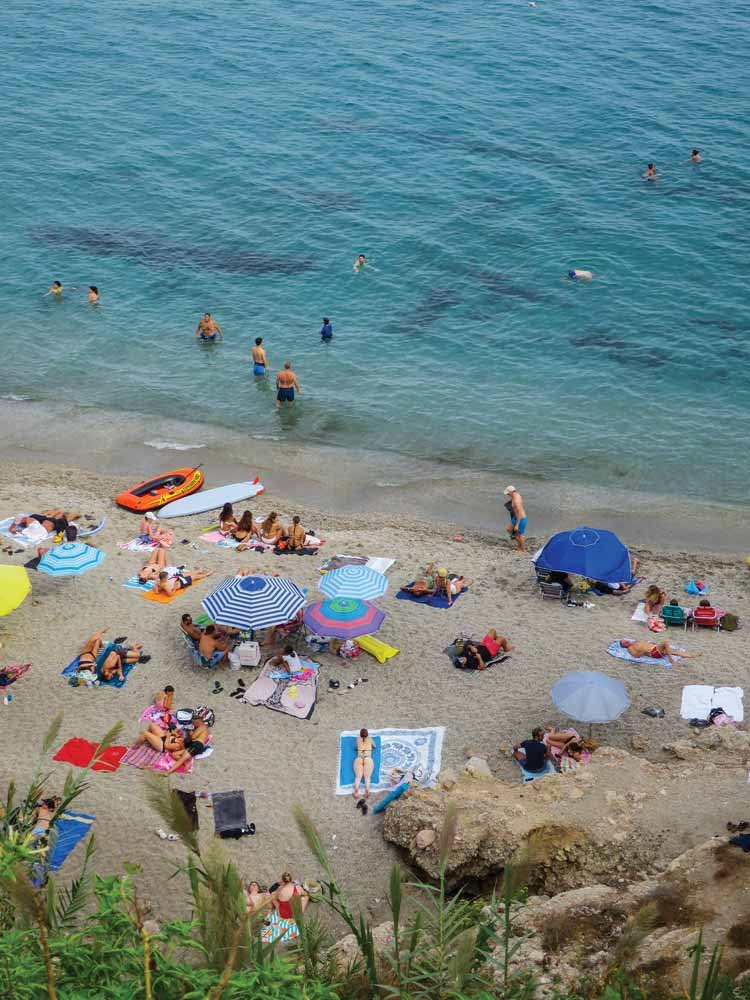
Nerja is a seaside escape with a cinematic past made famous by a beloved Spanish TV series, “Verano Azul” (Blue Summer). Its beaches shimmer beneath towering cliffs, while its annual fiesta for the Virgin Mary unfurls in a riot of music and devotion.
I checked into the cliff-hugging Parador de Nerja, where the infinity-blue sea made time dissolve. But nothing prepared me for the Nerja Caves, where millions-year-old stalactites drip like frozen waterfalls. Time moves differently underground.
Standing in that cool cavern with its vast universe, I felt simultaneously small and infinite, the paradox at the heart of Andalusia.
Can You Live Forever Here?
Maybe immortality isn’t about adding years but adding life to your years. In Andalusia, you can say that life is lived as a ritual that is sun-kissed, sea-breezed and soul-quenching.
And me? I arrived curious. I have left convinced. If I’m lucky, a piece of me will live forever in Andalusia.
Travel Planner
Best Time To Go: Spring / Fall • Suggested trip length: 7-10 days.
For more travel information about Spain, visit spain.info/en/