Türkiye
Echoes of Eternity
From mosaics to megaliths in Türkiye
By Cynthia David
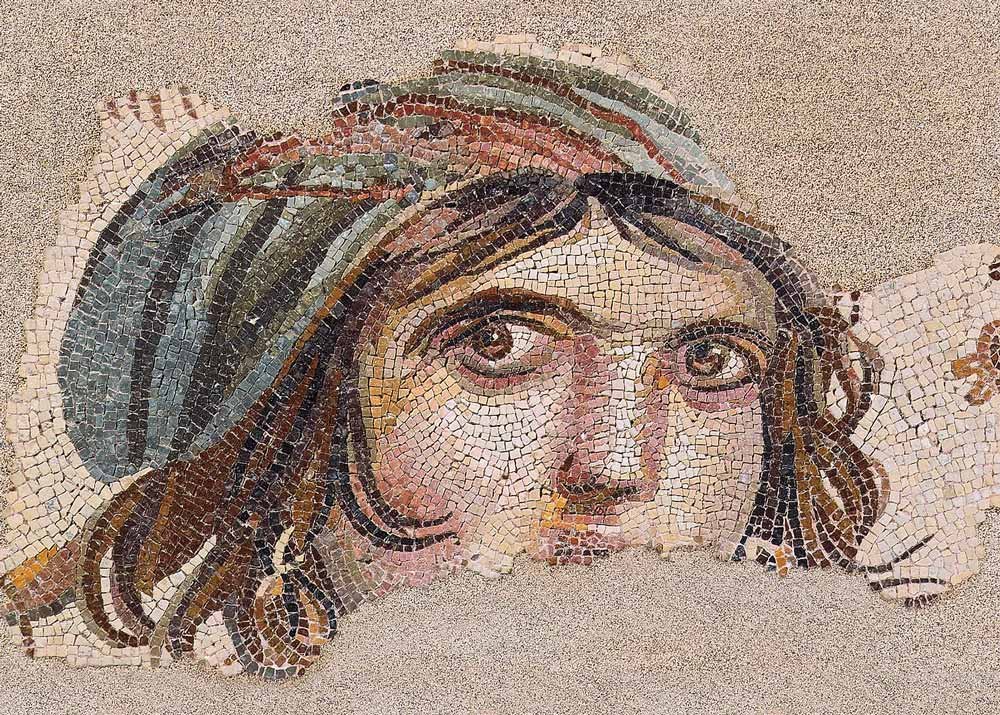
The room is pitch black save for the face of a young woman, pieced together from tiny stone and glass tiles. A few unruly chestnut curls escape from beneath her grey kerchief, framing wide, startled brown eyes that seem to follow everyone who enters.
Who are you, I want to ask. What have you seen?
“Gypsy Girl,” as she’s affectionately known, is the crown jewel of the Zeugma Mosaic Museum in Gaziantep, southeastern Türkiye. The museum—among the largest mosaic collections in the world—showcases Roman artistry rescued from the depths of time. Her gaze, dating back nearly 1,800 years, has been compared to da Vinci’s Mona Lisa.
She was discovered in the ancient Roman city of Zeugma, founded around 300 BCE by Seleucus I Nicator, one of Alexander the Great’s generals. The city flourished on the banks of the Euphrates River, wealthy residents adorning their villas with lavish mosaics of Greek myths and scenes of daily life—Zeus transforming into a golden bull to seduce Europa, musicians playing lyres, and huntsmen chasing gazelles.
In the late 1990s, as the rising waters of the Birecik Dam threatened to submerge Zeugma, archaeologists worked frantically to salvage what they could. The fragment containing Gypsy Girl’s face was uncovered accidentally beneath a fallen column. Today, the museum’s galleries shine with mosaics that once graced Roman floors. Each one is exquisite.
Market Life
That sense of being immersed in the past lingered as we stepped into Gaziantep’s bustling Coppersmiths Bazaar, Bakırcılar. On a Saturday morning, the covered stone alleys rang with the clang of hammers as coppersmiths beat pots and pans into shape, a craft handed down for centuries.
At the entrance, a strolling vendor balanced a tall stack of golden simit on a tray atop his head, hawking Türkiye’s favourite snack. Unlike bagels at home, these rings of dough are baked rather than boiled, delivering a crisp crust encrusted with sesame seeds and a tender, chewy inside.
The spice stalls were a riot of colour and fragrance. Jewel-toned pyramids of powder—paprika, sumac, cumin, cinnamon—perfumed the air. The smoky, almost raisin-like aroma of isot or Urfa biber, caught my nose. This local chili seasons everything from kebabs to muhammara, a roasted red pepper and walnut dip.
Everywhere, giant bins were heaped with pistachios. Locals claim Gaziantep pistachios are the finest in the world. They are an essential ingredient in the city’s famous baklava, where paper-thin layers of buttered phyllo cradle ground pistachios, baked crisp and then drenched in sugar syrup. Pastry shops tempt with trays of diamond-cut pieces that sparkle in the window.
Pistachios also lend their nutty bite to lokum (Turkish Delight), those chewy cubes scented with rosewater.
Winter is Coming
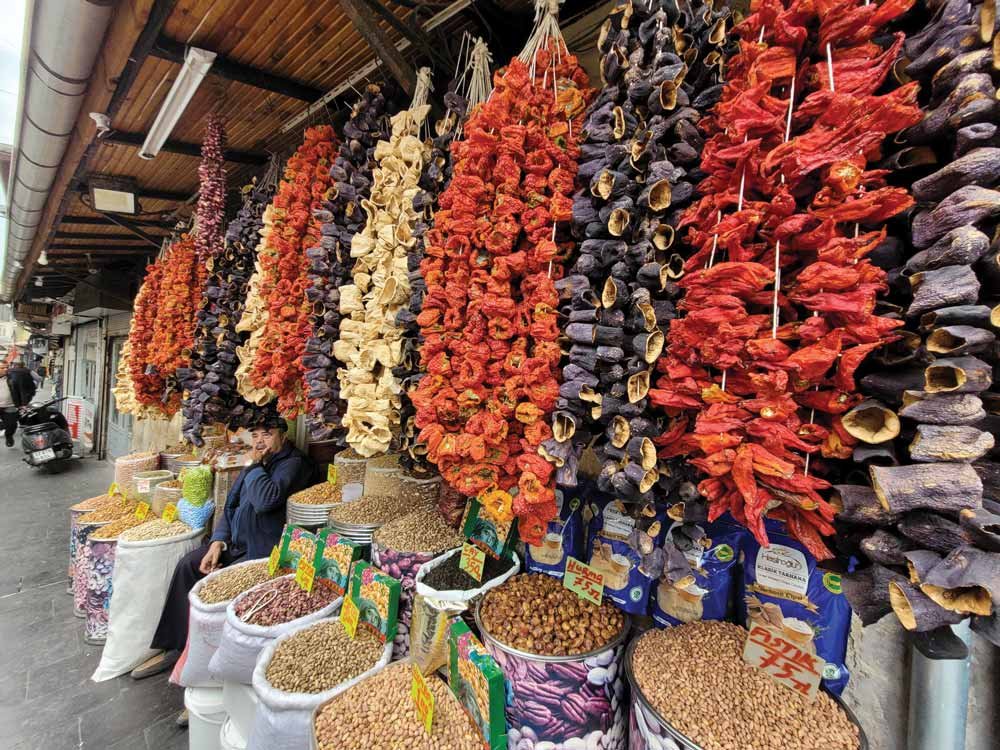
In autumn, masses of metre-long strings of sun-dried peppers, zucchini and eggplant hang like festive streamers above outdoor market stalls. Vendors happily unhook a few colourful strings with a long metal pole for buyers to inspect.
I’d first encountered these curious hollowed-out vegetable shells in İstanbul, in the kitchen of the elegant Seraf restaurant, where Michelin-recommended chef Sinem Özler preserves traditional recipes from across Türkiye. She explained how cooks rehydrate the dried shells in boiling water before stuffing them with spiced lamb and rice, a warming winter dish that links today’s families to generations past.
Türkiye’s Food Capital
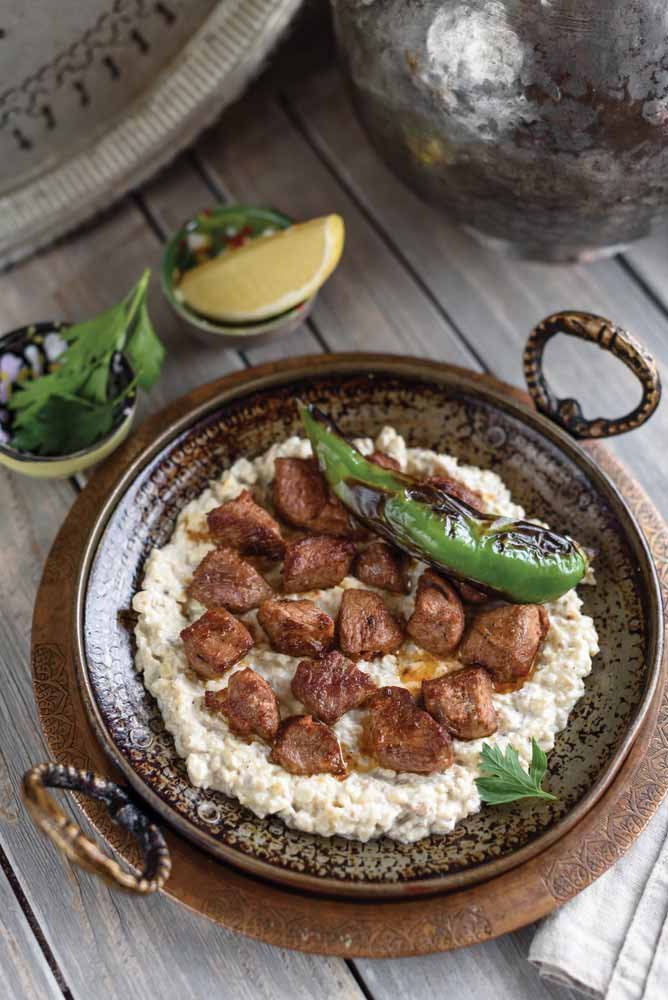
Gaziantep proudly boasts 30 types of kebab. Many begin with hand-minced lamb or beef, grilled over charcoal on long skewers. At bustling İmam Çağdaş, our guide insisted I try the Alinazik, three minced lamb kebabs swimming in yogurt mixed with garlic and silky pureed eggplant. A triumph of taste and texture. This devotion to culinary heritage earned Gaziantep recognition as a UNESCO City of Gastronomy in 2015.
Eggplant is king here too, appearing in as many as 40 different dishes. Meals begin with a spread of mezes—colourful shareable plates. Salads are fresh, often tossed with tangy pomegranate molasses. Favourite drinks include ayran, a salted yogurt cooler, and tulip-shaped glasses of black tea.
Time for a Coffee Break
Coffee is a daily ritual here. For a glimpse of tradition, we ducked into Tahmis Kahvesi, a mid-17th-century coffee shop still drawing crowds four centuries later. Its dark wood-panelled interior glowed with chandeliers, stained-glass and patterned banquettes. It’s said that this bracingly strong brew spread the love of coffee through the Ottoman Empire and the world.
Dawn of Civilization
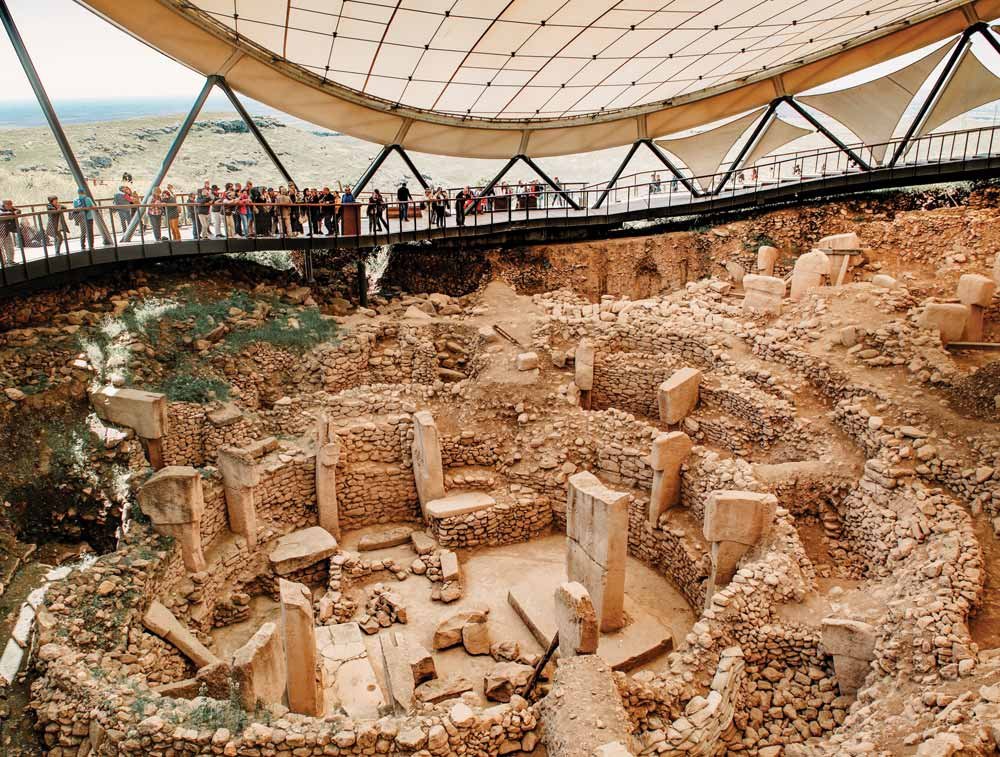
If Gypsy Girl seemed ancient, she was but a blink compared to our next stop: Göbeklitepe, near Şanlıurfa. We followed a boardwalk across a windswept plateau to what looked like a sports stadium with a swooping roof. Peering down, we gasped at a circle of T-shaped limestone pillars, some rising five metres and weighing 10 tons. Built nearly 12,000 years ago by Neolithic hunter-gatherers—long before the pyramids—Göbeklitepe is one of the world’s oldest human-made monumental structures.
Road to Şanlıurfa
Şanlıurfa’s old town spreads beneath a hill crowned by a medieval fortress. We wandered narrow lanes lined with stone houses, their courtyards hidden behind carved wooden doors. In the 16th-century Gümrük Han, once a Silk Road caravanserai, I tasted menengiç “coffee”—caffeine-free and nutty, brewed from roasted wild pistachios, cream, and sugar, then topped with crushed pistachios.
That evening in this UNESCO-designated City of Music, we joined a Sıra Night, a traditional gathering of music and food. Seated before a low table, we watched a chef knead raw lamb with bulgur, herbs and isot chili peppers, a beloved local specialty. As a final flourish, he flung the paste against a plate held above his head where it stuck fast, to great applause.
Inside the sprawling Şanlıurfa Archaeology Museum, replicas of Göbeklitepe’s pillars display animals and abstract symbols, while the Karahantepe project showcases new Taş Tepeler discoveries—human figures and sacred carvings that redefine the origins of settled life. But no museum can compare to standing on that hillside, gazing down at the megaliths and across the golden plain. This is the Fertile Crescent, cradle of agriculture, where humans first cultivated wheat, barley, lentils and chickpeas.
My trip to southeast Türkiye came full circle on the flight home, when Turkish Airlines served bread made with einkorn flour, nature’s oldest wheat. Tearing into its nutty crumb, I thought of the fields of the Fertile Crescent, of Göbeklitepe’s silent stones, of Gypsy Girl’s gaze.
Southeastern Türkiye is a place where the layers of time are tangible—in its mosaics, markets and meals. To travel here is to walk among civilizations, to taste tradition, and to leave feeling less like a tourist and more like a time traveller.
A watery devotion
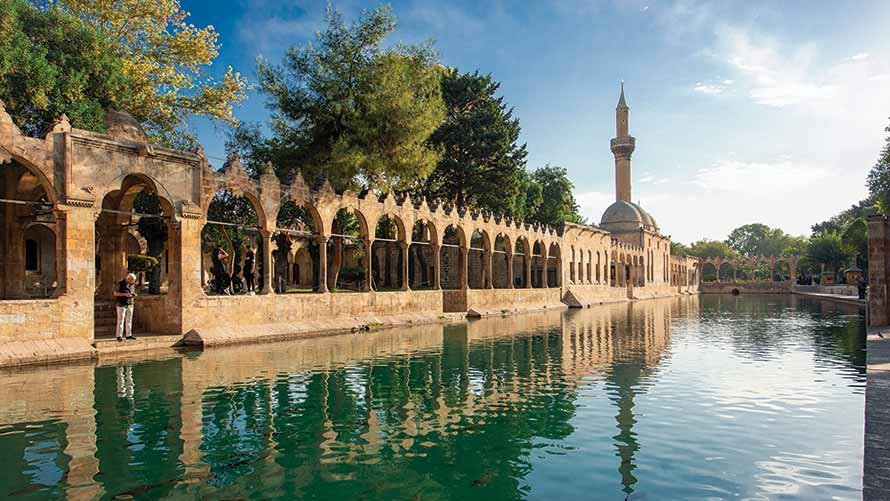
Each year, thousands of people flock to Balıklı Göl, the sacred lake in Şanlıurfa’s leafy Gölbaşı Park. According to legend, King Nimrod hurled the prophet Abraham into a blazing fire from the fortress above. God, it is said, turned the flames into water and the burning logs into fish, which still swim here today. Feeding the carp is a cherished custom, believed to bring blessings.
Did You Know?
Turkish coffee is on the UNESCO Intangible Cultural Heritage List. Many Turks believe the patterns in the cup can reveal your fortune.
Travel Planner
To start your trip planning to Türkiye, visit goturkiye.com